
Magnus Wallberg
@CMWallberg
Technology Evangelist, UMC
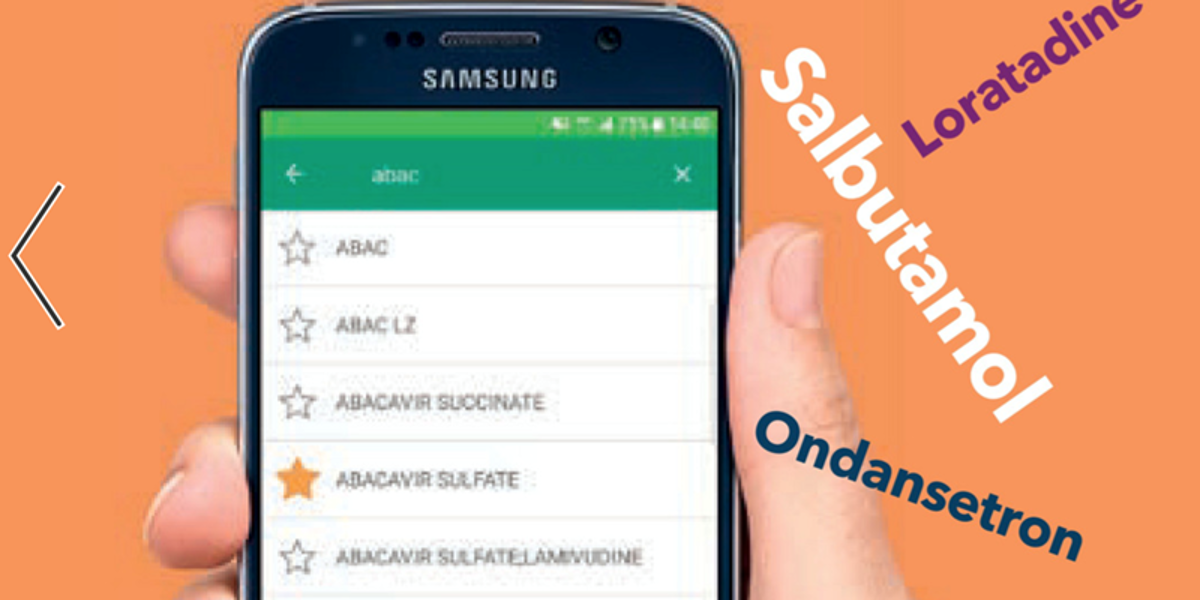
The WHODrug country list look-up service is piloting a new channel for easier access to structured and quality-assured medicinal product information, tailored for use in mobile reporting apps and other data-collection tools by countries in the WHO Programme for International Drug Monitoring.
Using standards from the start ensures improved quality, less manual work, and quicker processing of information throughout the entire pharmacovigilance system, from the patient to global drug safety systems and back.
When reporting suspected adverse drug reactions reliable identification of a medication used is vital. However, it is not enough to only know details about the medication suspected of causing a drug-related problem. It might be an unexpected medicine that is responsible for the problem or an interaction between two or more medicines. Therefore, reliable identification of concomitant medications is also important. In addition, for issues such as quality-related problems it is important to know the actual brand or trade name of the product – not only its active ingredients.
Even though pharmacovigilance professionals may all agree that it is important to have correct and detailed information about a patient’s medicines, the use of quality-assured and standardised information sources for medicinal products hasn’t been as widely adopted as it could be. However, good sources are available; within WHO’s drug monitoring programme, information about medicinal products has been collected and structured in the global dictionary WHODrug since 1968. The dictionary is optimised for use within pharmacovigilance and clinical trials. It is available as text files and integrated in tools such as WHODrug Insight, VigiFlow, and VigiLyze.
Several organisations have asked Uppsala Monitoring Centre for an easy way of getting access to a simple list of medicinal product names to include in e.g. mobile apps and various data collection tools. Rather than handling the complexity of the entire dictionary, which contains detailed information about products from around 130 countries, all they need is a small subset of WHODrug that is relevant for their region. In addition, new types of tools, using new technologies, also require new ways of accessing information.
In late 2016 UMC decided to address this need by providing easy access to subsets of WHODrug for usage within the Programme. A project was launched with the WEB-RADR project as a pilot user, and in February 2017 UMC successfully launched a web service that make this possible.
The service makes a country-specific subset of WHODrug available, containing information about medicinal products with their trade names and active ingredients. There is no graphical user interface; instead the service is intended to be integrated in other tools, such as the mobile app developed in the WEB-RADR project. In this tool the service is used to present a list of medicinal products for the user to pick from. The selected product can then be used to retrieve news, get safety information, and report adverse events.
The new WHODrug service is up and running, servicing the mobile app developed in the WEB-RADR project. It will be evaluated within the scope of the WEB-RADR project and after evaluation, it will be decided if it should be offered for a broader use.
Magnus Wallberg
@CMWallberg
Technology Evangelist, UMC
Since 2020, the ICPV has worked to improve drug safety reporting at Instituto Nacional de Cardiología Ignacio Chávez, with promising outcomes.
16 October 2025
The annual #MedSafetyWeek campaign reminds us that medicines work best when they're safe. In Aligarh, healthcare workers came together to make that message a living reality.
19 November 2025
Two-thirds of pharmacists in Nigeria witness weekly cough syrup abuse, yet poor reporting systems and unclear guidelines prevent effective intervention, leaving its youth at risk.
03 December 2025