Ingrid Katherine Rengifo Hernández
Medical Doctor and General Surgeon,
Specialist in Auditing and Quality Assurance with emphasis in Epidemiology,
Government of Tolima – Health Secretariat

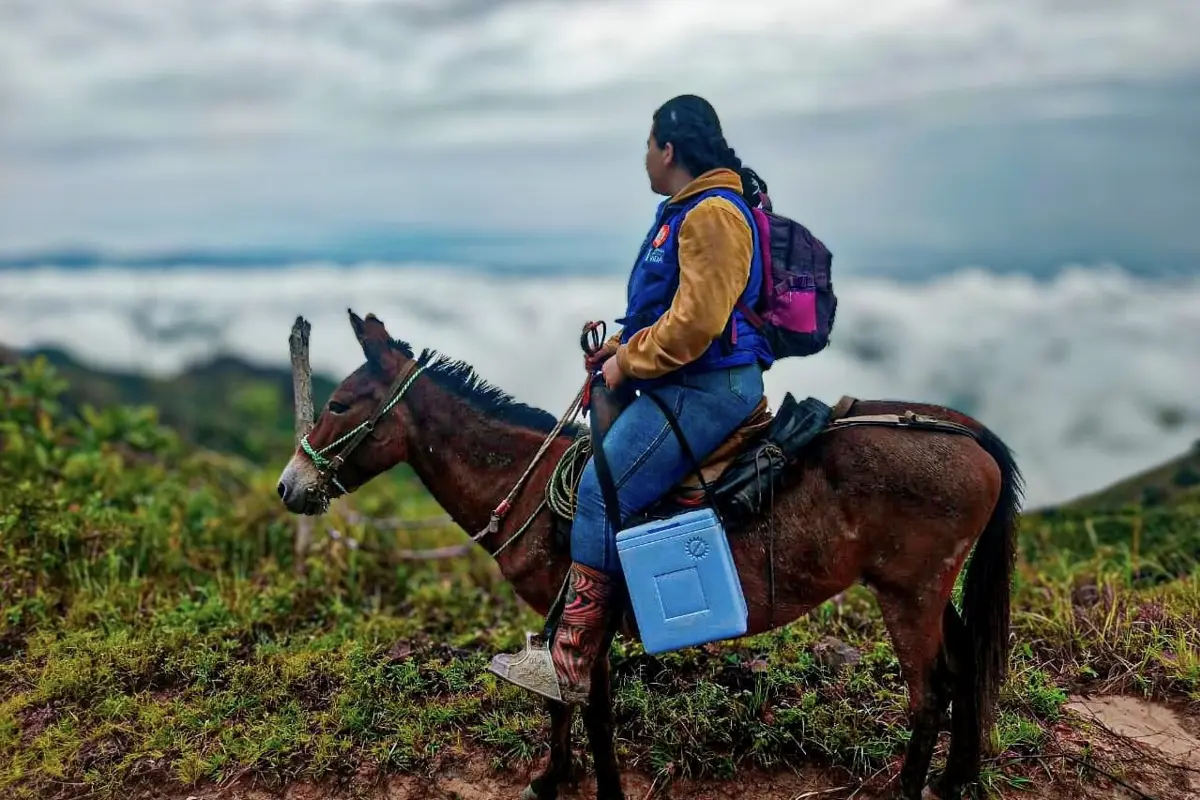
A yellow fever outbreak in Tolima, Colombia, put the region's pharmacovigilance system to the test. Here's how rigorous vaccine surveillance protected the community.
Epidemiological outbreaks represent the ultimate test for pharmacovigilance systems. For the department of Tolima, a region in Colombia, which has been steadily developing its pharmacovigilance system since 2024, the test was a yellow fever outbreak, which, as of 25 February 2026, recorded a cumulative total of 153 cases across 12 key municipalities. Of these, 61 people have died, underscoring the aggressiveness of the virus.
The response to the disease outbreak was unprecedented for the region: it successfully deployed a mass immunisation strategy, vaccinating 820,390 people over a little more than a year using an inclusive and territorial approach:
Expanded coverage: Vaccination from 9 months of age, including adults over 59 years of age in prioritised areas and pregnant women.
Field operations: Use of fixed and mobile vaccination posts in the most remote rural areas, along with outreach brigades conducting active house-to-house searches.
Logistical rigour: Correct cold storage of vaccines and precise biological inventory management.
The vaccination programme began at the grassroots level. Rigorous vaccine safety monitoring was conducted across the network of clinics and hospitals in Tolima, transforming its culture of adverse event reporting. This was not merely about completing forms; healthcare staff were trained to collect meaningful evidence, such as detailed clinical records, identification of vaccinations by batch numbers, and documentation of concomitant medications. This documentation became the DNA of each report, enabling an unprecedented level of traceability in the department’s health history.
The key tool of this operation was the VigiFlow platform. In an emergency context, paper forms and email were not enough. VigiFlow enabled real-time capture of adverse event following immunisation (AEFI) reports from any location in the department of Tolima. It also allowed for full traceability, linking clinical data to the specific biological product administered. VigiFlow also ensured transparency, giving national and international stakeholders visibility into vaccine behaviour across the territory.
To address this outbreak, the Ministry of Health and Social Protection, the National Health Institute, INVIMA, and the Pan American Health Organisation (PAHO) had to work together seamlessly. The success of this vaccination strategy is a testament to their collaboration, enabling the exchange of technical information and immediate support in public health decision-making. Coordination went beyond formalities, with on-the-ground technical accompaniment, joint validation of safety data, and the unified criteria to address the health emergency.

Each adverse event was assessed using the WHO Causality Assessment Tool, with methodological support from PAHO consultants and a dedicated multidisciplinary expert committee. By determining whether an AEFI was linked to the yellow fever vaccine, this process provided transparent, evidence-based answers to community concerns and helped safeguard and build confidence in the vaccination programme, a critical defence against misinformation within the community.
This would not have been possible without parallel technical support. Through systematic monitoring and intensive training of healthcare personnel, the department of Tolima ensured that every administered dose was backed by a safety framework. Prompt spontaneous notification of AEFI and causality analysis helped maintain community confidence in the vaccination programme.
The mitigation of the outbreak marks not only an epidemiological success but a turning point in Tolima's public health capacity. When surveillance systems are strong, staff are well-trained, and institutions work together, the result is a public health response that communities can trust. Tolima's story is one of a region that rose to meet a crisis and emerged with greater capacity than before. Should a future health crisis occur, the Department of Tolima will be ready.
Subscribe to Uppsala Reports for stories from the front lines of pharmacovigilance.
Subscribe
Ingrid Katherine Rengifo Hernández
Medical Doctor and General Surgeon,
Specialist in Auditing and Quality Assurance with emphasis in Epidemiology,
Government of Tolima – Health Secretariat
Mexico's new pharmaceutical waste framework puts One Health into practice, from hazardous-waste handling in hospitals to expired pills in the kitchen drawer.
27 August 2026
A review of PBRERs assessed between 2023 and 2025 reflects how the SFDA has gradually refined its approach to monitoring medicine safety.
10 July 2026
By building adverse drug reaction reporting directly into clinicians' existing patient records system, two Sydney hospitals turned years of near-silence into over 1,600 reports.
13 August 2026