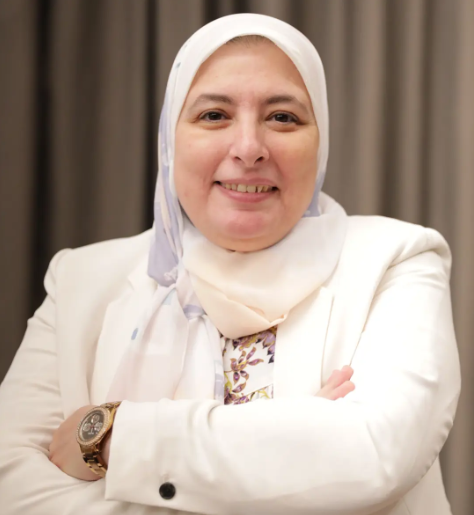
Hadir Rostom
WHO ACSoMP Member, Pharmacovigilance Consultant, ISoP Advisory Board Member & Lecturer at MSA University

Launched at the 2025 Cairo meeting, the new ISoP MENA Chapter merges two former chapters to strengthen medicine safety across the region.
Regional chapters have long played an important role in the International Society of Pharmacovigilance's (ISoP) strategy to strengthen collaboration, advance education, and support medicines safety worldwide.
In the Middle East and North Africa (MENA), this journey was shaped by the establishment of the ISoP Middle East Chapter in 2015 and the ISoP Egypt Chapter, which was founded in 2020 during the COVID-19 pandemic. Together, these chapters contributed to building local expertise, encouraging scientific exchange, and promoting safer use of medicines across the region.
The 24th ISoP Annual Meeting, held in Cairo from 24-27 October 2025, provided an important opportunity to bring pharmacovigilance professionals together, exchange experiences, and celebrate ISoP’s 25th anniversary. Building on this momentum, the new ISoP Middle East and North Africa (MENA) Chapter was established through the joint efforts of its founding members, Thamir Alshammari, Mohamed A. Elhawary, Hadir Rostom, and Manal Younus.
The new chapter brings together the experience, networks, and achievements of the former ISoP Middle East and ISoP Egypt Chapters, creating a broader platform for regional collaboration. As part of its launch, elections will be held to establish the chapter’s leadership through a democratic and transparent process.
The chapter aims to support collaboration across Arab countries, many of which refer to the Arab Good Pharmacovigilance Practices (GVP) guidelines as a common foundation for national pharmacovigilance activities. Developed under the auspices of the League of Arab States, the guideline provides a shared regional reference for pharmacovigilance systems and activities. These countries include Algeria, Bahrain, Comoros, Djibouti, Egypt, Iraq, Jordan, Kuwait, Lebanon, Libya, Mauritania, Morocco, Oman, Palestine, Qatar, Saudi Arabia, Somalia, Sudan, Syria, Tunisia, the United Arab Emirates, and Yemen.

The region has several strengths that can support this collaboration, including a shared Arabic language, comparable cultural contexts, and increasingly aligned regulatory approaches. At the same time, pharmacovigilance systems across the region remain diverse. Some countries have well-established structures and resources, while others are still developing the systems, workforce, and infrastructure needed to conduct essential medicine safety activities.
These differences reflect a range of local realities. While some countries have the resources, regulatory capacity, and institutional infrastructure needed to support pharmacovigilance programmes, others continue to face barriers such as limited funding, shortages of trained personnel, humanitarian crises, or competing healthcare priorities.
Against this background, the ISoP MENA chapter aims to serve as a platform for education, research collaboration, knowledge exchange, and capacity building. By bringing together professionals with different experiences, needs, and perspectives, the chapter seeks to strengthen medicine safety systems, encourage sustainable partnerships, and support patient safety across the region.
As the chapter begins its work, its founders hope it will serve as a bridge between countries at different stages of pharmacovigilance development, creating opportunities to learn from one another and work together toward a shared goal: safer medicines for all patients across the MENA region.
The founders of the ISoP MENA Chapter would like to acknowledge the support of the current ISoP Executive Committee, whose strategic vision included strengthening and establishing a new operational framework for ISoP Chapters. We would also like to express our gratitude to Marco Tuccori, Associate Professor of Pharmacology at the University of Verona, for sharing the governance model of the ISoP Europe Chapter and for his valuable contributions to the development of the ISoP MENA Chapter governance documents.
READ MORE:
Arab Guidelines on Good Pharmacovigilance Practices (GVP)
From new regional chapters to global pharmacovigilance milestones, Uppsala Reports keeps you informed on what matters most. Subscribe now.
Subscribe
Hadir Rostom
WHO ACSoMP Member, Pharmacovigilance Consultant, ISoP Advisory Board Member & Lecturer at MSA University

Manal Mohammed Younus
Head of Iraqi Pharmacovigilance Centre

Thamir M. Alshammari
WHO GACVS Member & Associate Professor at Jazan University

Mohamed A. Elhawary
Senior Vaccine Safety Officer at the Egyptian Ministry of Health & Population
A review of PBRERs assessed between 2023 and 2025 reflects how the SFDA has gradually refined its approach to monitoring medicine safety.
10 July 2026
Mexico's new pharmaceutical waste framework puts One Health into practice, from hazardous-waste handling in hospitals to expired pills in the kitchen drawer.
27 August 2026
By building adverse drug reaction reporting directly into clinicians' existing patient records system, two Sydney hospitals turned years of near-silence into over 1,600 reports.
13 August 2026