
Huahua Yin
School of Allied Health and Human Performance, College of Health, Adelaide University

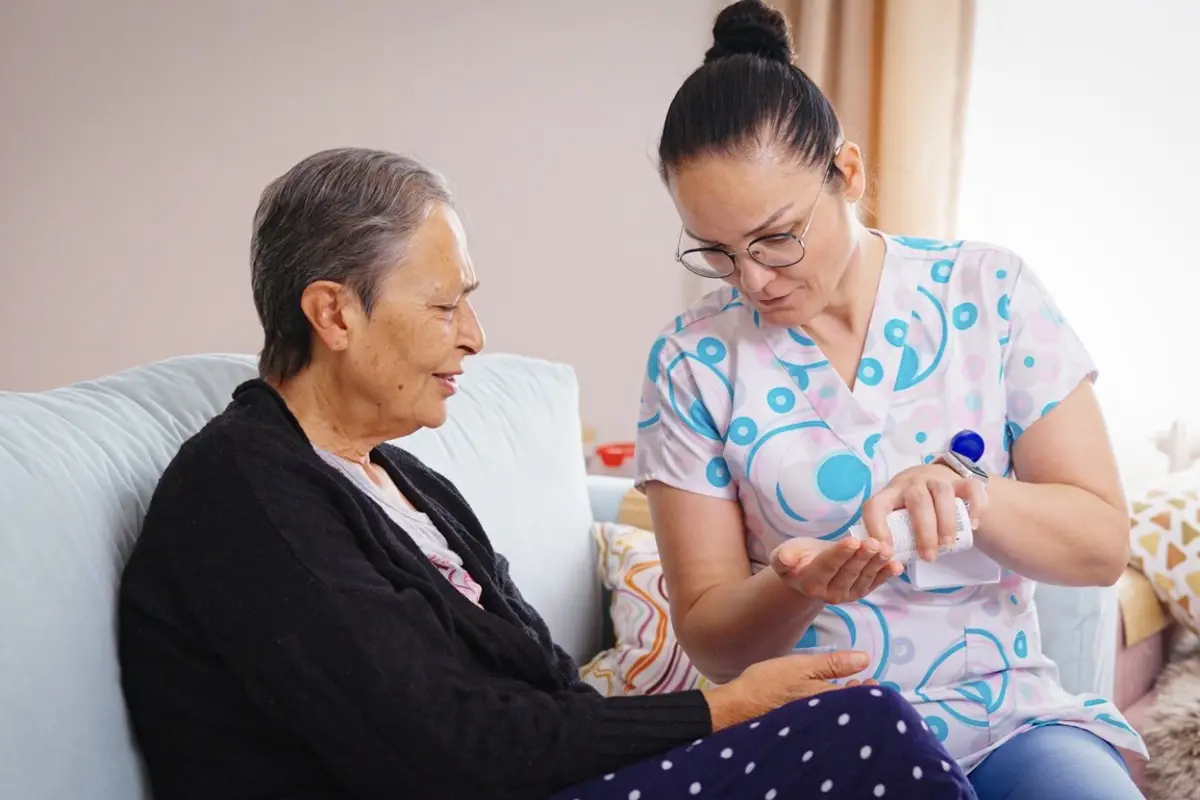
Medication safety, pharmacist collaboration and resident involvement are at the heart of an Australian initiative aiming to improve medication safety in aged care homes.
Medication errors and adverse events are major causes of avoidable harm in healthcare systems worldwide, particularly among older people. A recent report demonstrated that, in Australia, more than 95% of residents of residential aged care homes (RACHs, also known as care homes, long-term care facilities, or nursing homes in other countries) were experiencing at least one medication-related problem at the time of a medication review. Residents of aged care homes commonly use medications with a high risk of potential harm. For example, one-fifth of residents are prescribed an antipsychotic medication, with more than half receiving this medication for a prolonged period. The World Health Organization (WHO) recommends integrating pharmacovigilance into universal health coverage strategies to monitor patient safety across all levels of care, but improving medication safety in aged care homes through pharmacovigilance remains challenging.
Pharmacists play an important role in medication management in aged care homes. They conduct comprehensive medication reviews, monitor medication use, and communicate with residents, nurses, and general medical practitioners to optimise medication safety and effectiveness. In 2024, the Australian Government launched a national funding initiative for pharmacists specialising in aged care to practice clinically in RACHs. As one of the first countries to implement this aged care on-site pharmacist (ACOP) model, it is important to understand the services ACOPs commonly provide and what supports or hinders their on-site practice in RACHs. Our team at Adelaide University conducted a survey investigating activities undertaken by ACOPs, as well as perceived barriers and facilitators to their roles. Our findings (from 40 ACOPs who completed our survey) showed that ACOPs commonly perform medication reviews, medication administration advice, and medication reconciliation. Most survey respondents were satisfied with their roles and felt integrated within the RACH team, but they also asked for additional support and resources to help them with their work, such as structured tools and ways of working that support interprofessional communication and collaboration on the quality use of medicines.
The ACOP program in Australia provides new opportunities for pharmacists to work collaboratively within the RACH team and with residents and their families or carers. To support this collaboration, our team proposed ‘Medication Safety Needs Rounds’. Based on the principles of palliative care needs rounds, which include multidisciplinary meetings to identify and review residents at high risk of dying without a good plan in place, Medication Safety Needs Rounds similarly involves an iterative monthly cycle of proactively identifying residents at risk of medication-related harm, discussing these residents at an interprofessional triage meeting, and implementing follow-up actions to support their ongoing treatment with medicines. Our research project aims to co-design, test, and evaluate the feasibility and scalability of Medication Safety Needs Rounds in RACHs. Over 12 months (2025-2026), we conducted five co-design workshops (three with health/aged care professionals and two with residents/families and consumer advocates). During this process, we developed and refined a comprehensive co-designed resource pack of implementation tools and materials, including seven supporting materials for health/aged care professionals and three tailored materials for residents and their families/carers, to support their understanding and engagement in the Medication Safety Needs Rounds process. Medication Safety Needs Rounds are currently being tested in six aged care homes across Australia, and we plan to evaluate the feasibility and scalability of this new intervention in the near future.


Overall, Medication Safety Needs Rounds offers a novel approach to improving medication safety in aged care homes. By combining pharmacist-led interprofessional collaboration and resident involvement, this initiative aims to support safer, more person-centred care. Ongoing evaluation will help determine how Medication Safety Needs Rounds can be implemented more widely in aged care settings to foster teamwork and improve resident outcomes.
Read more:
"Medicine safety: Aged care", Pharmaceutical Society of Australia Ltd, 2020.
GA Hughes et al., "Key considerations for codesign in residential aged care homes: An example of medication safety needs rounds", Australasian Journal on Ageing, 2026.
Stories like this show pharmacovigilance at work beyond the clinic. Get them in Uppsala Reports, straight to your inbox.
Subscribe
Huahua Yin
School of Allied Health and Human Performance, College of Health, Adelaide University

Georgina Hughes
School of Allied Health and Human Performance, College of Health, Adelaide University

Janet Sluggett
School of Allied Health and Human Performance, College of Health, Adelaide University
Complementary medicines are widely used and often perceived as safe, yet high doses, product stacking, and unclear labelling can quietly increase the risk of harm.
07 April 2026
An Australian research team is using artificial intelligence to improve the safe dosing of unfractionated heparin, a high-risk drug linked to serious side effects.
30 March 2026
Analysis of paired reports from the Norwegian ADR Registry suggests merging consumer and healthcare professional accounts of the same adverse event may improve causality assessment
19 August 2026