
Uppsala Reports editor
@UMCGlobalSafety

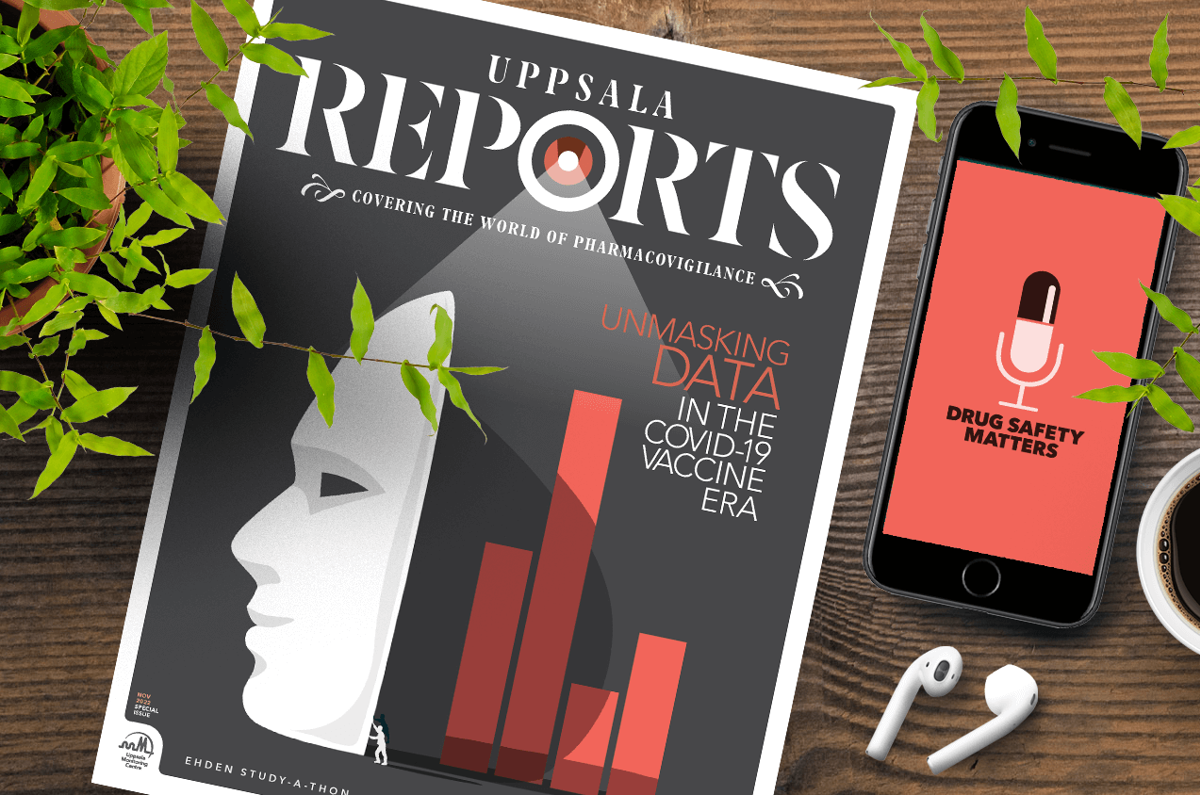
What are the implications for signal detection when new approaches to reporting create greater data streams than have ever been present for older medicinal products?
The successful rollout of the COVID-19 vaccines was supported by a stream of reports of potential adverse drug reactions. This is great for vaccine safety, but what of the ability to detect signals from other drugs?
In the latest episode of Drug Safety Matters, join Federica Santoro and Sara Vidlin, a data scientist at UMC, as they discuss how this imbalance of COVID-19 vaccine reports presents challenges for detecting signals for other drugs through the statistical phenomenon of ‘masking’. Learn how they detect it, how it affects their data analysis, and what researchers can do to ‘unmask’ impacted data to ensure accurate drug reaction surveillance.
This episode is part of the Uppsala Reports long read series, a selection of the most relevant stories from Uppsala Reports magazine in audio format. Read the original article here. Subscribe by visiting the Drug Safety Matters website.
Uppsala Reports editor
@UMCGlobalSafety
Disproportionality analysis is pharmacovigilance’s signal-detection workhorse. But more reports do not mean better evidence, and crude results can mislead.
05 February 2026
Egypt's swift detection of vincristine-associated necrotising infections demonstrates how effective pharmacovigilance can identify risks and protect patients globally.
08 May 2025
South Africa’s pharmacovigilance system has been evolving for over a decade with UMC’s data management system supporting them every step of the way.
02 September 2024